
Beyond the Chatbot: Why Invisible AI Wins
Why the next era of automation happens silently behind the scenes rather than inside a chat box

Somewhere around early 2023, open text boxes became the default user interface for virtually every new digital tool. Software companies rushed to paste a glowing chat widget into the bottom-right corner of their dashboards. Whether you were editing a spreadsheet, booking a flight, or reviewing payroll records, the proposed interaction was always the same: open a prompt window, write out a complete paragraph detailing what you wanted, press enter, and wait for a response.
Initial excitement surrounding conversational models quickly masked a structural design flaw. Text boxes are demanding. They force human beings to convert immediate visual or spatial tasks into written syntax. For small, repetitive actions, typing prompts repeatedly turns out to be slower than clicking a well-designed button or letting an automated pipeline run quietly in the background.
A growing community of software engineers, product designers, and workplace researchers now recognize this shift. The initial era of generative demonstration is yielding to a quieter phase focused on utility. Rather than making software talkative, developers are building invisible software systems that process context, fix errors, and organize background workflows without requiring an ongoing dialog. Understanding how generative AI models work reveals why shifting these models from front-end chatter to back-end logic produces far more dependable digital tools.

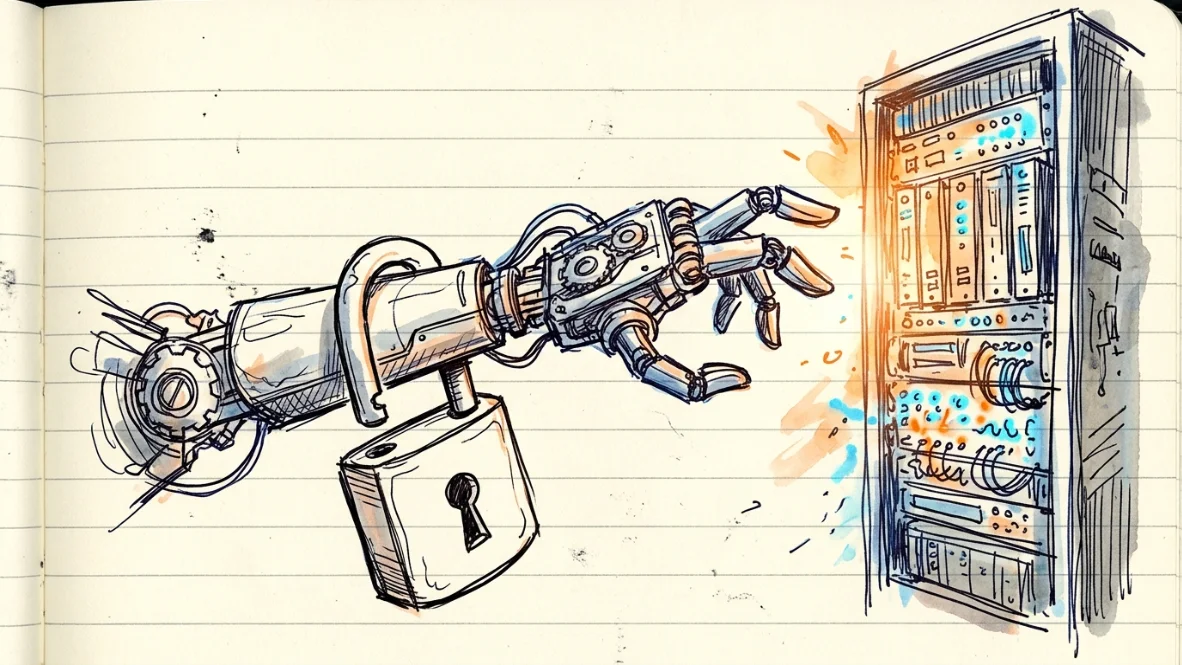
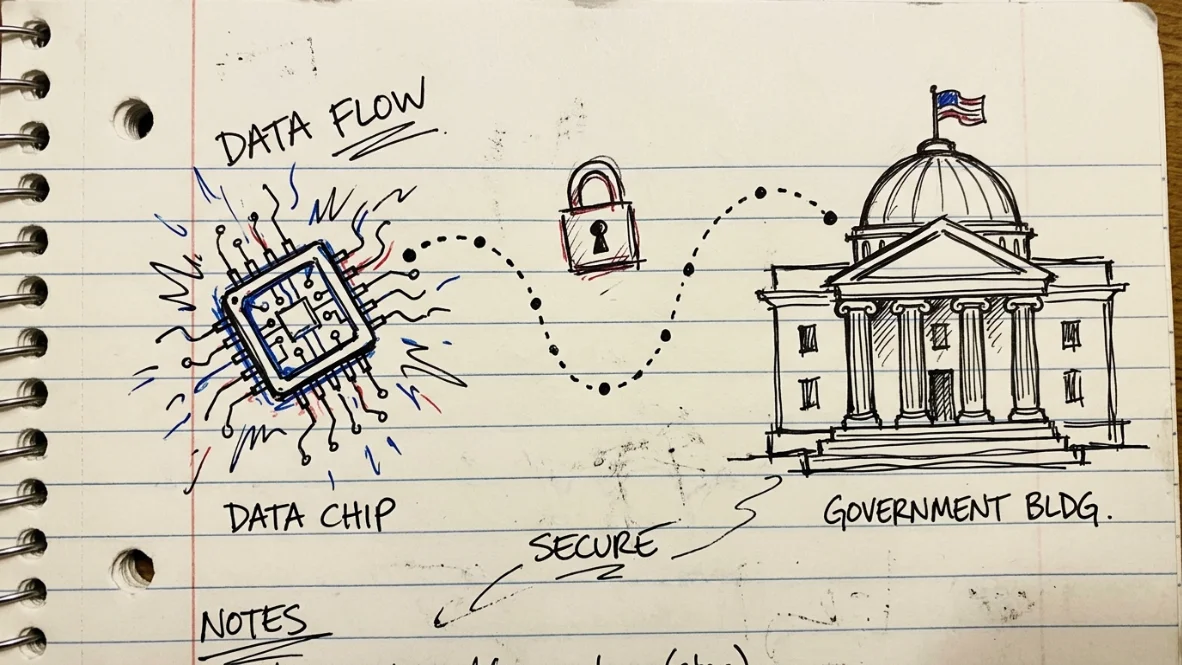
1. The Chat Fatigue Peak: The Hidden Friction of Text Prompts
Conversational interfaces were celebrated as a breakthrough in human-computer interaction because they eliminated rigid command lines. Yet, after two years of daily exposure, knowledge workers are experiencing acute prompt fatigue. Studies conducted by research institutions like the Nielsen Norman Group show that command-line-style text interfaces introduce considerable cognitive load when applied to complex context-rich workflows.
Consider the physical and mental overhead of formatting a prompt. To extract an accurate answer from a standard general-purpose language model, an employee must supply system role instructions, clarify constraints, define tone, and paste context. If the initial response strays off course, the worker enters a cycle of iterative prompt tuning. What should have taken 8 seconds through a single contextual UI click becomes a 4-minute conversation with a statistical probability engine.
📌 CATATAN PENTING: Text interfaces transfer the effort of structure onto the user. A well-designed user interface minimizes cognitive effort, whereas an open prompt window forces the user to articulate every parameter from scratch.
This friction becomes particularly apparent in domain-specific tasks. When accounting staff reconcile monthly vendor invoices, they do not want to discuss the nature of debits and credits with an AI persona. They want duplicate line items highlighted automatically, mismatched tax IDs highlighted in red, and currency conversions recalculated instantaneously upon file upload. The chat bubble offers zero value in this scenario; it merely sits as an extra visual layer between the professional and their data.
Furthermore, prompt-based interactions interrupt focus state. According to organizational research from the Harvard Business Review, context switching consumes up to 21% of an employee’s daily cognitive output. Switching out of a primary workspace into a separate chat window to formulate instructions fractures deep attention. The fundamental issue isn’t that language models are ineffective; it’s that conversational chat was the wrong physical form factor for daily enterprise software integration.
The historical trajectory of compute interfaces reveals that explicit text input rarely stays the dominant mechanism for long. Looking back at the history of artificial intelligence, software evolves from manual rule-writing to spatial UI, and eventually toward autonomous execution. We are currently passing through the awkward stage where users act as human translators, converting business requirements into text prompts that software parses back into action.
| Interaction Dimension | Chatbot & Prompt Interface | Invisible Software Approach |
|---|---|---|
| Primary User Input | Explicit multi-sentence prompts | Implicit contextual triggers & standard actions |
| Cognitive Overhead | High (Prompt crafting & context setting) | Low (System reads existing workspace state) |
| Execution Location | Isolated conversation window | Background system layers & native APIs |
| Workflow Friction | Forces context switching | Operates inline within current tools |
| Primary Failure Mode | Hallucination in direct answers | Silent misinterpretation of background rules |
| Ideal Use Case | Exploratory ideation & open drafting | Automated sorting, validation & background logic |
2. The Hype vs. Utility Gap: VC Capital Shifts to Infrastructure
The tech industry’s initial response to breakout language models was to build simple application wrappers. Thousands of startups launched with thin codebases that simply relayed user prompts to third-party endpoints via application programming interfaces (APIs). These tools brought early excitement, but their retention metrics plummeted sharply within 6 to 9 months of release.
According to analytical data tracking technology maturation cycles, such as the Gartner Hype Cycle, early application wrappers quickly succumb to commoditization. When every product shares identical underlying language endpoints, customer acquisition costs soar while switching costs drop to near zero. Venture capital firms have recognized this structural bottleneck and are radically adjusting their portfolio strategies.
Investment is moving away from surface-level front-end applications toward backend infrastructure, data pipeline orchestration, and private domain models. Investors now prioritize technical depth over viral sign-up counters. The central thesis driving funding today focuses on silent operational reliability rather than flashy conversational output.

Building high-substance systems requires solving unglamorous technical problems. These include enterprise data compliance, vector database indexing latency, deterministic audit logging, and local on-device hardware optimization. A quiet model that reduces database query overhead by 18% or automatically cleans enterprise records behind firewalls adds durable economic value without ever displaying a chatbot window.
Academic institutions like the Stanford Institute for Human-Centered AI emphasize that sustainable automation relies on clear accountability structures. Front-end chat wrappers obscure accountability; when an agent hallucinates a response inside a casual dialog, identifying the precise systemic break proves difficult. In contrast, deterministic background software logs every operation, leaving clear audit trails for engineering teams.
💡 TIPS PRAKTIS: When evaluating software vendors, disregard flashy video demonstrations showing conversational dialogs. Ask for their background API execution metrics, context retention accuracy, and local computational efficiency scores instead.
This capital migration marks a healthy maturation stage for technology adoption. The industry is moving past the phase of selling novelty toward building invisible software that seamlessly integrates into real-world business operations.
3. What is ‘Invisible AI’?: Practical Implementations in Action
Invisible software does not ask users to initiate interaction. It operates passively beneath standard application layers, analyzing data context, pre-fetching relevant inputs, and correcting structural noise before a human operator even spots an issue. The goal of invisible system design is total operational invisibility—technology that succeeds by staying out of the way.
To understand how this operates in practice, examine how modern software development platforms employ background assistance. Systems like automated static code analyzers do not present a chat box asking developers what they wish to build. Instead, as the developer types code in their primary editor, background processes analyze syntax trees, check against security databases published by standard bodies like the National Institute of Standards and Technology, and highlight potential vulnerability spots directly inline.
Real-World Case Study 1: Predictive Document Routing in Healthcare
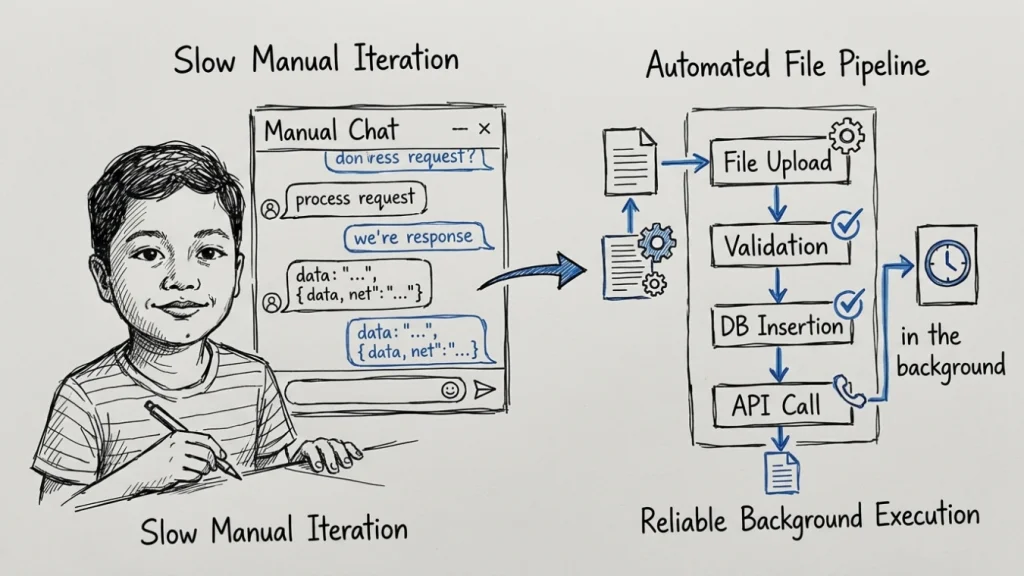
In mid-sized clinical environments, intake staff previously spent up to 14 minutes per patient manual keying scanned insurance cards, diagnostic histories, and doctor notes into central databases. Early attempts to deploy conversational chatbots required nurses to query the system with explicit text prompts like: “Extract patient medical history from uploaded PDF.”
This prompt-based approach introduced friction and high error rates during peak hospital hours. Modern clinical infrastructure replaced this dialogue interface with an invisible processing pipeline. Now, when a document hits the system scanner, optical character models parse the visual records, cross-reference medical codes against standard repositories, and populate internal records instantly. Intake staff simply view pre-filled, verified form fields, saving up to 11 minutes per patient record without opening a single chat session.
Real-World Case Study 2: Intelligent Cache & Context Pre-fetching in Enterprise ERPs
Global supply chain managers must track regional logistics disruptions across maritime lanes and regional trucking corridors. Rather than forcing managers to submit prompt queries like: “Summarize current port delays in Southeast Asia,” contemporary Enterprise Resource Planning (ERP) platforms integrate background event monitoring.
These background systems constantly digest climate reports, port authority telemetry, and customs database feeds documented in publications by organizations such as IEEE Spectrum. When the platform detects shipping latency exceeding 37 hours at a specific port, it automatically flags affected purchase orders inside the manager’s normal dashboard view, complete with calculated backup routes. The system alerts the human decision-maker only when action is necessary.
As explored in our detailed analysis on future tech trends prediction, the underlying engine of software value is transitioning from user-driven queries to contextual anticipation. Software should act like a skilled administrative assistant: handling background details quietly and speaking up only when crucial decisions require human authority.
4. The Substance-First Future: Evaluating High-Utility Software
As marketing teams continue labeling virtually every software release with artificial intelligence branding, technology buyers and organizational leaders need a clear framework to separate empty features from high-substance systems. Identifying software that delivers true utility requires looking past superficial interfaces to evaluate baseline efficiency gains.
The core criterion of substance-first software is time-to-value without workflow displacement. Tools requiring workers to master complex prompting languages or adapt to intrusive new windows often cost more in lost output than they deliver in performance. High-utility software meets the user inside their existing environment.
| Evaluation Metric | Flashy AI Feature (Low Utility) | Substance-First Feature (High Utility) |
|---|---|---|
| Integration Depth | Floating widget overlaying screen | Native API hook executing behind standard UI |
| User Onboarding | Requires prompt engineering training | Requires zero workflow retraining |
| Data Dependency | Requires manual text copy-pasting | Reads existing system databases directly |
| Operational Trigger | User manually writes chat prompt | System executes on scheduled database event |
| Value Measurement | Subjective response quality | Quantifiable time saved per business task |
When selecting software solutions for personal or organizational use, consider using a structured assessment workflow to screen prospective platforms. The following checklist offers a pragmatic template for procurement teams and technology leaders.
- [x] Context Native Integration: Does the tool read data directly from existing storage locations without manual export?
- [x] Low Interaction Friction: Can the task be performed in two clicks or fewer without requiring open text entry?
- [x] Deterministic Auditing: Does the system generate structured operational logs for compliance and debugging?
- [x] Fallback Mechanisms: Does the software graceful fail back to standard logic if machine models experience low confidence scores?
- [x] Local Processing Options: Can sensitive computations execute on local edge hardware or private clouds?
- [x] Measurable Efficiency Gain: Is the system proven to reduce task completion time by at least 25% under controlled testing?
⚠️ Beware of platforms that require manual data pasting into external chat windows. Exporting corporate data into unverified prompt windows poses grave privacy risks and breaks data continuity.
According to computational standards set by international research groups like the ACM Digital Library, the most resilient software designs emphasize low user friction and predictable state transitions. Software that respects human focus remains useful long after chat novelty wears off.
Conclusion: Embracing Quiet Technology
The progression of computational technology has always moved toward quiet integration. Early personal computers required users to memorize complex operating commands. Visual desktop interfaces simplified this by introducing recognizable icons. Today, the most effective software operates beneath the surface, managing complex technical steps automatically so people can focus on critical thinking.
The hype surrounding conversational chatbots served an important historical purpose: it demonstrated to the broader public what advanced statistical models could accomplish. But typing prompts into a floating window was never the final destination for enterprise software design. It was merely a temporary step along the path toward truly useful digital tools.
The future of technology belongs to systems that operate quietly, anticipate real-world requirements, and deliver measurable utility without constantly demanding our attention. By moving past chatbot chatter, we can build and adopt invisible software that helps us focus on what actually matters.
