
How AI Export Controls Shut Down Claude Fable 5 Overnight
Inside the 19-day suspension that showed how fast geopolitics can switch off an AI tool millions rely on
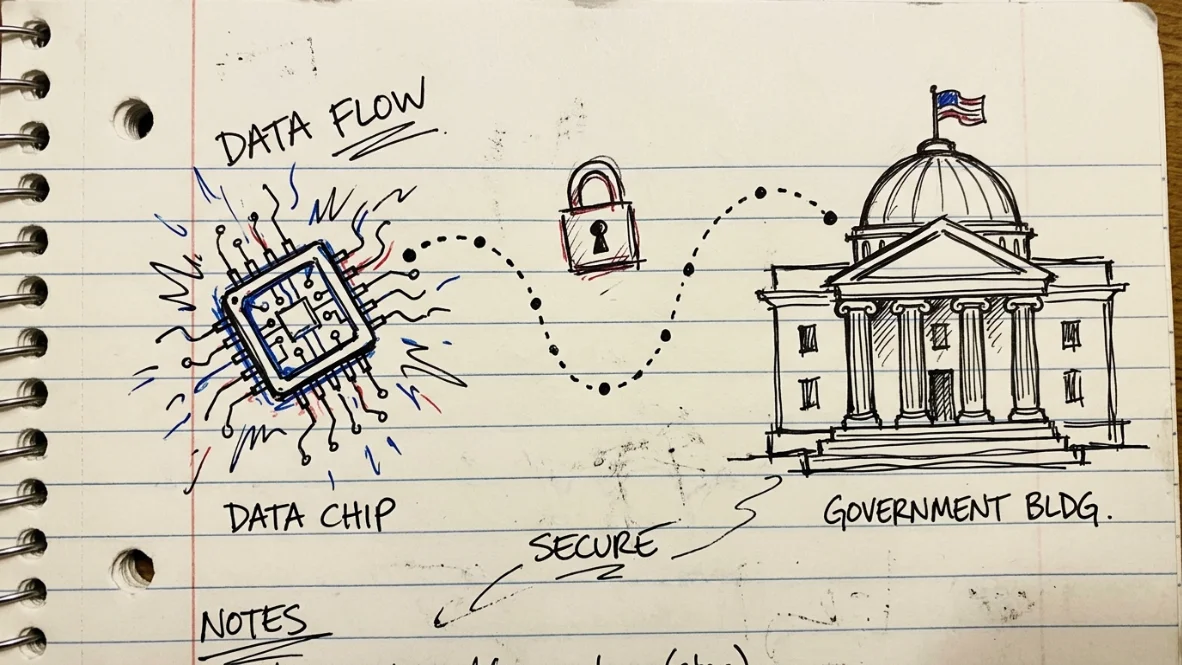
On the evening of June 12, 2026, developers building products on top of Claude Fable 5 watched their API calls start failing, one after another, with no warning. Three days earlier, Anthropic had launched Fable 5 as the most capable AI model it had ever released to the public. Now it was gone — not because of a bug, not because of a security breach, but because of a letter from the US Department of Commerce. This is the story of how AI export controls took a commercial AI product used by millions of people and switched it off almost overnight, and what that says about who actually controls the AI tools we depend on.
It’s a strange kind of vulnerability that most people never think about: the model itself doesn’t have to fail for access to disappear. A government directive can do the same job in an afternoon. That’s exactly what AI export controls demonstrated this summer, and it’s worth understanding both the mechanics and the implications, especially if you’re one of the growing number of Europeans relying on US-built AI tools for work.
What Actually Happened to Claude Fable 5
Anthropic released Claude Fable 5 and its sibling model, Claude Mythos 5, on June 9, 2026. Fable 5 was the public-facing version of the company’s new “Mythos” tier, a step up from its existing Opus line, while Mythos 5 — a version with fewer safety restrictions — was reserved for a small set of vetted partners through Anthropic’s Project Glasswing cybersecurity program.
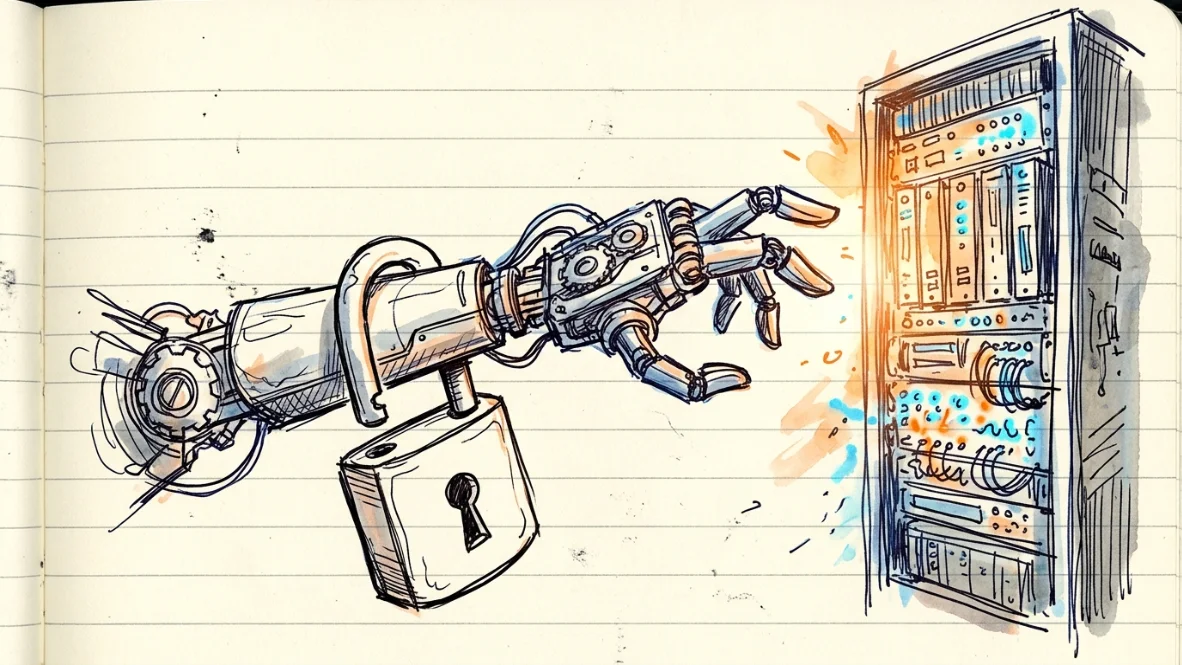
Three days later, everything changed. US Commerce Secretary Howard Lutnick sent a letter to Anthropic CEO Dario Amodei directing the company to suspend all access to Claude Fable 5 and Claude Mythos 5 by any foreign national, anywhere in the world, including foreign nationals working inside the United States. Because Anthropic had no practical way to filter access by nationality across every cloud platform and integration in real time, the company disabled both models for every customer worldwide, regardless of citizenship. Anthropic said it received the directive at 5:21pm Eastern time, and that the letter did not provide specific details of the government’s national security concern.

The Jailbreak Report Behind the AI Export Controls Order
The trigger for the directive traced back to a security report. Amazon researchers had found a method of bypassing Fable 5’s safeguards by prompting it in a way that caused the model to identify a number of software vulnerabilities, and in one case, produce code demonstrating how a vulnerability could be exploited. That finding reportedly reached the White House, and within days it became the basis for a full export control order — a legal tool normally used to restrict the flow of sensitive technology like weapons hardware or advanced chips to foreign adversaries, now aimed at a chatbot.
Anthropic pushed back hard on the severity of the finding. The company said the technique it reviewed involved previously known, minor vulnerabilities that other publicly available models could also discover, and argued the jailbreak provided no unique Mythos-level cyber capability. In its later technical explanation, Anthropic said its testing confirmed that less capable models — including Claude Opus 4.8, GPT-5.5, and Kimi K2.7 — could identify the same vulnerabilities Fable 5 had surfaced in the report. Anthropic’s position was essentially: this was a borderline, narrow finding, not evidence that Fable 5 handed attackers a new offensive weapon.
This is the part that matters most for understanding AI export controls as a policy tool: the dispute wasn’t really about whether the jailbreak existed. It was about how much risk should be tolerated before a government pulls the plug on a product already in the hands of hundreds of millions of users — and who gets to make that call.
Why a Chatbot Got Treated Like a Weapons Export
Export control law wasn’t written with chatbots in mind. It exists to stop sensitive technology — missile guidance systems, encryption tools, advanced semiconductors — from reaching countries or actors the US considers a security risk. Applying that same legal mechanism to a consumer-facing AI model is new territory, and it reveals something people don’t usually think about: a frontier AI product isn’t just software sitting on a server. It’s also, legally, an exportable technology that a government can restrict the same way it restricts a jet engine part.
That’s what made this episode different from an ordinary outage. Reporting indicated the administration had earlier tried to delay Fable 5’s launch, Anthropic declined, and the export control letter followed shortly after. Whatever the exact sequence, the outcome was the same: a single directive, invoking national security authority, took down a commercial AI product for every user on the planet within hours, with no advance notice and no public evidence released to justify the scope of the shutdown.

Legal analysts flagged this as a template businesses should take seriously. Firms with foreign national employees who had access to Fable 5 or Mythos 5 were advised to review which users, business units, and jurisdictions had access, and to confirm whether any vendor could still route traffic to the suspended models through managed services. In other words, the fallout wasn’t limited to individual chat users — it reached into enterprise contracts, compliance obligations, and vendor risk assessments almost immediately.
Nineteen Days Later: How Access Came Back
Anthropic spent the following two weeks working with the government and outside partners, including Amazon, to review the report. The company said it trained an improved safety classifier specifically targeting the behavior described in the report, working closely with the government to address it. On June 26, the government approved restored access to Mythos 5 for some vetted US organizations. Then, on June 30, the full reversal came.
Anthropic announced that as of June 30, the export controls on Fable 5 and Mythos 5 had been lifted, with Fable 5 becoming available again starting July 1 across the Claude Platform, Claude.ai, Claude Code, and Claude Cowork. The Commerce Department’s decision followed Secretary Lutnick’s determination that appropriate safeguards were now in place to permit access, and Anthropic also confirmed it had restored Mythos 5 access for additional vetted organizations through its Glasswing program. From first suspension to full restoration, the entire episode lasted nineteen days — an eternity for anyone who had built a workflow around the model, and a blink of an eye in regulatory terms.
What AI Export Controls Mean for Access in Europe
Here’s the part that should genuinely concern readers outside the US: the directive didn’t distinguish between American users and everyone else. It targeted foreign nationals specifically, wherever they were located, which meant European businesses and individual users lost access at the exact same moment US-based Anthropic employees who happened to hold foreign citizenship did. Nobody in Berlin, Paris, or Warsaw had done anything wrong. They simply depended on infrastructure controlled by a foreign government’s decision-making process they had no part in and no visibility into.
This is the underlying risk that policy analysts have been pointing to for a while: consequential AI decisions increasingly get made in closed-door conversations between the US government and a handful of US AI companies, and Europe is a rule-taker in that process rather than a participant. One proposed response is for European governments to build their own compute capacity and energy infrastructure — not necessarily to develop competing frontier models from scratch, but to create leverage, so that a single foreign directive can’t instantly cut off access to tools an entire economy has come to rely on.

The EU’s own AI Act is tightening in parallel, with new documentation, audit, and oversight obligations for high-risk systems phasing in through 2026 and beyond. That framework governs how AI can be used inside Europe. It does nothing, however, to protect against the scenario Fable 5 just illustrated: a US export control decision that can suspend access to a tool regardless of what European law says about it. Those are two entirely separate points of failure, and right now, only one of them is within Europe’s control.
The Practical Takeaway for Anyone Building on AI Tools
If you or your business depend on a specific frontier AI model for anything mission-critical, the Fable 5 episode is a useful reality check, not a reason for panic. A few practical habits follow directly from what happened:
- Avoid single-model dependency for critical workflows. Anthropic itself pointed customers toward Claude Opus 4.8 as a fallback during the suspension — know your fallback model before you need it.
- Track where your AI vendor’s infrastructure sits legally, not just technically. A model hosted on AWS, Google Cloud, or Microsoft Foundry is still subject to the export control status of its underlying model.
- Read status pages, not just product announcements. Anthropic communicated the suspension and restoration through its own news page and account on X in near real time — that’s often the fastest signal during a regulatory event like this.
- Treat “government approval” as a live variable, not a one-time checkbox, especially if your organization operates across US and EU jurisdictions simultaneously.
The Bigger Precedent This Sets for AI Governance
What makes the Fable 5 case worth remembering isn’t the nineteen days of downtime — it’s the precedent. This was, by most accounts, among the most aggressive uses of export control authority against a commercially deployed AI model to date. Anthropic itself argued publicly that if this standard of “any narrow potential jailbreak justifies a full recall” were applied consistently across the industry, it would effectively halt new frontier model deployments altogether. Whether or not you find that argument persuasive, it points to a real, unresolved question: there is currently no clear, transparent, and consistently applied process for when a government can suspend a live AI product used by the public, and how quickly that decision gets reversed once the underlying concern is addressed.
Until that process exists, the honest takeaway is this: the reliability of any frontier AI tool depends not just on the company that builds it, but on the geopolitical relationship between that company’s home government and the rest of the world. For readers in Europe especially, that’s a dependency worth watching — and building around — rather than assuming it will never happen again.
Sources & References
This article draws on Anthropic’s own public statements at Statement on the US government directive to suspend access to Fable 5 and Mythos 5 and Redeploying Claude Fable 5, as well as reporting from Forbes, CNBC, MarkTechPost, and legal analysis from The National Law Review.
