UNCOVERED! 7 Mind-Blowing Facts About the Invention of the Thermometer!

Hello, Fact Fans! Have you ever paused to consider a world without thermometers? It’s hard to imagine accurately assessing a fever or precisely managing scientific experiments without this indispensable device. This seemingly simple instrument, which we often take for granted, possesses a remarkably rich and captivating history. Prepare to be astounded as we delve into 7 Mind-Blowing Facts About the Invention of the Thermometer that will undoubtedly deepen your appreciation for this essential tool. Grab a cup of coffee, settle in, and get ready for a journey through scientific innovation!
The invention of the thermometer is a testament to human curiosity and the relentless pursuit of knowledge. From the earliest rudimentary devices to sophisticated modern instruments, each step in its evolution tells a story of discovery and refinement. This article will highlight critical moments and surprising details, ensuring that every fact about the invention of the thermometer leaves you more informed and inspired.
1. Galileo’s Thermoscope: Not a Thermometer, But a Visionary Starting Point for the Invention of the Thermometer!
The Earliest Glimpse of Temperature Measurement
Our first mind-blowing fact transports us back to Italy, around the year 1593. It was there that the legendary polymath Galileo Galilei, often hailed as the father of observational astronomy, conceived of a device he named the ‘thermoscope’. Fact Fans, this was far from the calibrated digital thermometers or mercury devices we use today. Galileo’s thermoscope was ingeniously simple: an inverted glass bulb with a long, slender neck dipped into a container of water. As the air within the bulb expanded or contracted due to temperature changes, the water level in the neck would visibly rise or fall. This pioneering device, though lacking a precise numerical scale, was a foundational leap in the history of the invention of the thermometer.


This rudimentary instrument offered the first visual means to observe temperature fluctuations, even if its interpretations were subjective. It underscored the emerging scientific desire to quantify natural phenomena. Galileo’s work, while not directly a thermometer, ignited the spark that would lead to centuries of experimentation and innovation, ultimately shaping the entire concept of the invention of the thermometer as we understand it.
2. The Battle of the Scales: Multiple Minds Shaping the Invention of the Thermometer‘s Language!
The Evolution of Standardized Temperature Scales
Following Galileo’s initial breakthrough, the scientific community recognized an urgent need for standardized, universally understood temperature scales. This leads us to our second fascinating fact: no single individual is solely responsible for all the temperature scales we rely on today. This era saw intense scientific collaboration and competition. Daniel Gabriel Fahrenheit, a German physicist, introduced the Fahrenheit scale in 1724, defining the freezing point of water at 32°F and the boiling point at 212°F. This scale remains predominantly used in the United States and a few other nations, a curious detail in the broader history of the invention of the thermometer.

Later, in 1742, Swedish astronomer Anders Celsius developed the more intuitive Celsius scale, setting water’s freezing point at 0°C and boiling point at 100°C. This scale is now the international standard. For highly precise scientific applications, Lord Kelvin introduced the Kelvin scale, based on absolute zero. Each of these scales represents a critical intellectual contribution, highlighting that the invention of the thermometer wasn’t just about the physical device, but also the analytical framework for interpreting temperature.
3. From ‘Fickle’ Water to ‘Reliable’ Mercury: The Transformative Fluid in the Invention of the Thermometer!
The Shift in Thermometric Substances
The early thermoscope’s reliance on air and water presented significant challenges: water was susceptible to freezing, boiling, and, crucially, air density changes affected readings due to atmospheric pressure. This brings us to our third enlightening fact about the invention of the thermometer: the pivotal shift in thermometric fluids. Around the 17th century, scientists, particularly in the Netherlands, began experimenting with more stable liquids, leading to the adoption of mercury and alcohol.

Mercury quickly became the preferred choice due to its consistent thermal expansion, non-wetting properties with glass, and broad liquid range. Alcohol also found its niche, especially for measuring extremely low temperatures due to its much lower freezing point. This transition was a revolutionary step in the precision and reliability of the invention of the thermometer. It transformed temperature measurement from an approximate observation into a more exact science, overcoming the inherent limitations of earlier designs and paving the way for more accurate scientific instruments.
4. The Dawn of Medical Thermometry: Santorio Santorio’s Pioneering Vision in the Invention of the Thermometer!
Applying Temperature Measurement to Human Health
Our fourth significant fact about the invention of the thermometer delves into its crucial application in healthcare. Initially, temperature measurement wasn’t directly linked to human body temperature. The groundbreaking idea to use it for medical diagnosis came from Santorio Santorio, an astute Italian physician and scientist in the early 17th century. He ingeniously adapted Galileo’s thermoscope for clinical purposes, becoming one of the first to apply a device to quantitatively measure a patient’s body temperature.

Though his early medical thermometers were large, cumbersome, and required considerable time to yield a reading, Santorio’s work represented a paradigm shift in medical practice. Prior to this, doctors relied on subjective assessments like touch. His pioneering efforts laid the indispensable foundation for the development of clinical thermometers, which are now ubiquitous in every home and healthcare facility. This specific application of the invention of the thermometer profoundly impacted diagnostics and patient care, demonstrating science’s power to directly improve human well-being.
5. The Sealed Breakthrough: Eliminating Atmospheric Interference, a Key Step in the Invention of the Thermometer!
The Innovation of Enclosed Thermometers
A critical limitation of Galileo’s early thermoscopes was their open-air design, which rendered them vulnerable to fluctuations in atmospheric pressure, leading to inconsistent and inaccurate readings. Our fifth compelling fact about the invention of the thermometer addresses this challenge directly. The crucial innovation of the ‘sealed’ thermometer emerged in the mid-17th century, largely credited to Duke Ferdinand II de’ Medici of Florence. He developed the first truly enclosed thermometer, utilizing alcohol within a hermetically sealed glass tube.
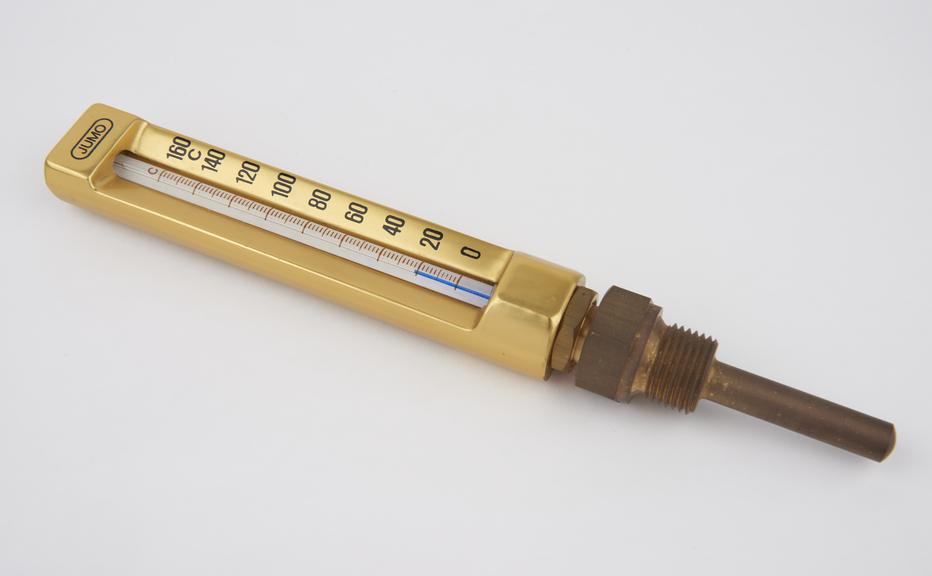
This innovation was absolutely fundamental. By isolating the thermometric fluid from external atmospheric influence, the instrument could provide far more consistent and reliable temperature measurements. The thermometer transitioned from a mere qualitative indicator to a precise scientific instrument, enabling the accurate calibration of temperature scales and significantly broadening its scientific utility. The development of the sealed design marked a turning point in the practical success and widespread adoption of the invention of the thermometer.
6. Infrared Thermometers: The Contactless Marvel of Modern Temperature Measurement!
The Evolution Towards Non-Contact Devices
Leaping into the modern era, our sixth fact about the invention of the thermometer showcases a contemporary marvel: the infrared thermometer, commonly known as a ‘temperature gun.’ This advanced device operates on the principle of detecting infrared radiation emitted by any object. This allows for rapid, non-contact temperature readings, a feature that has become particularly invaluable in various sectors, especially during recent global health crises where minimizing physical contact is paramount.
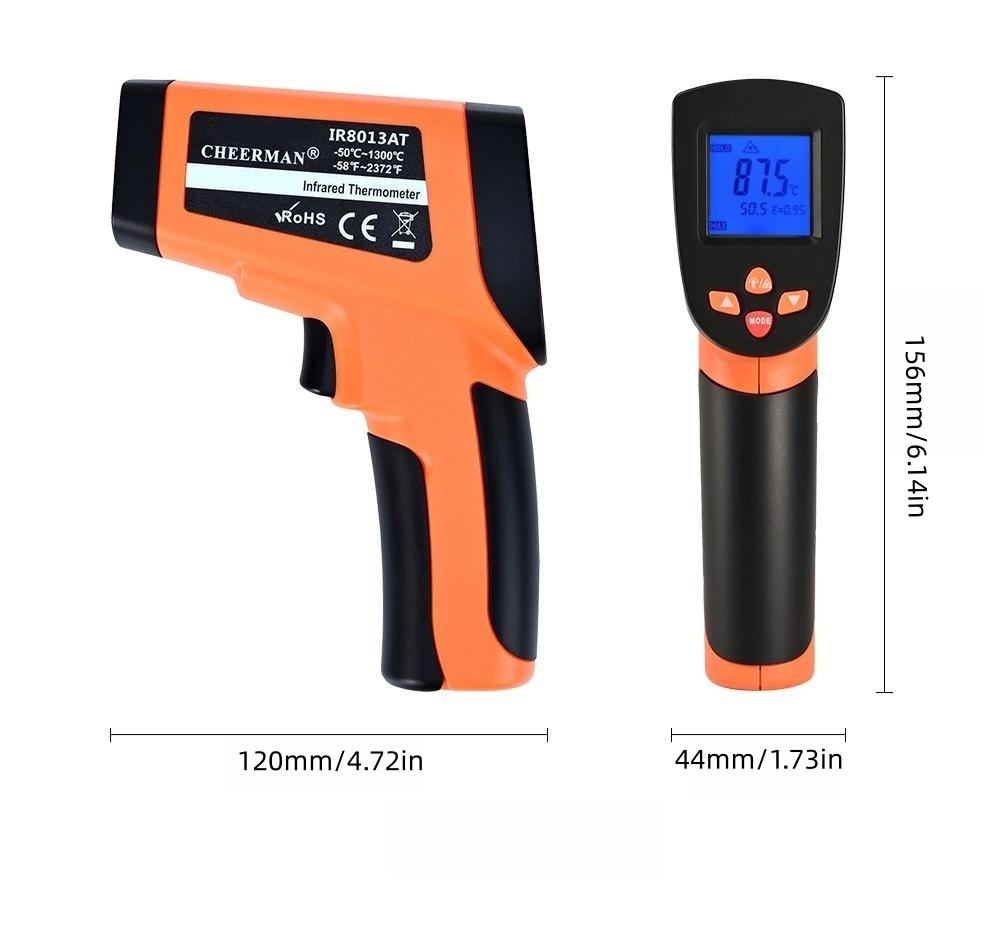
The speed, efficiency, and hygienic nature of infrared thermometers make them an indispensable tool across medical, industrial, and even domestic applications. Imagine obtaining an accurate temperature reading in mere seconds, simply by pointing the device. This technological leap underscores humanity’s continuous drive for innovation, further enhancing the capabilities and relevance of the invention of the thermometer in an increasingly interconnected and health-conscious world. It’s a testament to how far temperature measurement has come!
7. The World’s Largest Thermometer: A Monument to Temperature Extremes and the Invention of the Thermometer!
The Thermometer as a Landmark and Symbol
Our seventh and final mind-blowing fact about the invention of the thermometer is perhaps the most visually striking. In Baker, California, USA, stands a colossal thermometer, towering an impressive 41 meters (134 feet) high! This isn’t a functional instrument for daily weather reports, but rather a magnificent monument. Its purpose is to commemorate the highest air temperature ever recorded on Earth: a scorching 56.7 degrees Celsius (134 Fahrenheit) on July 10, 1913, in the notorious Death Valley, known for its extreme heat.
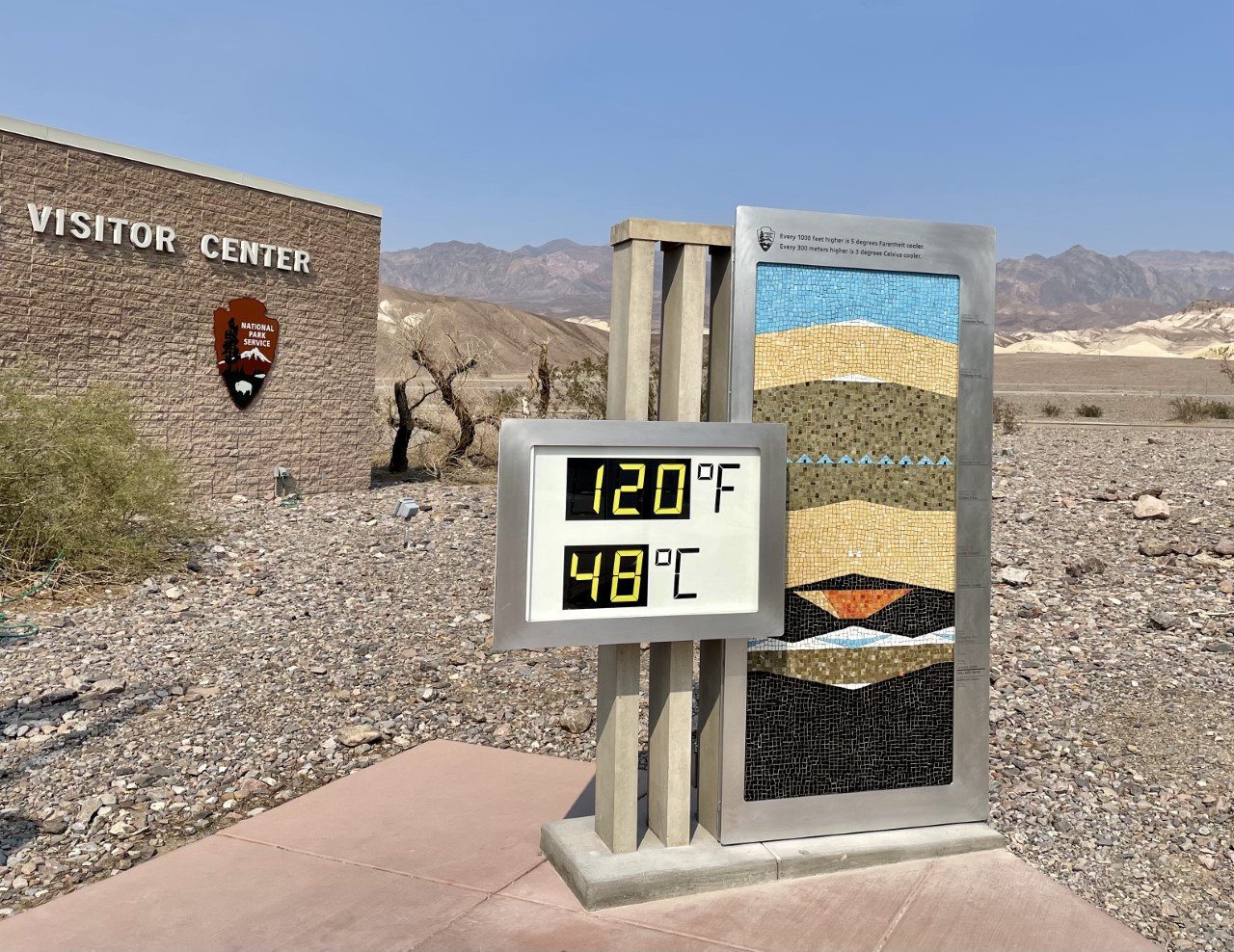
This giant thermometer transcends its functional origins to become a prominent tourist attraction and a powerful symbol. It represents both humanity’s fascination with natural extremes and our scientific prowess in measuring and documenting them. From a humble glass tube to a monumental landmark, the journey of the invention of the thermometer is truly extraordinary and a powerful reminder of how innovation can shape our understanding of the world.
Reflecting on the Journey of the Invention of the Thermometer
Fact Fans, our exploration of these 7 mind-blowing facts about the invention of the thermometer reveals a profound truth: every significant scientific advancement is born from deep curiosity and an unwavering commitment to problem-solving. The thermometer, now a seemingly simple and ubiquitous device, is the culmination of centuries of intellectual endeavor, meticulous experimentation, and collaborative genius among brilliant minds.
From Galileo’s early thermoscope to the sophisticated infrared devices of today, this journey is a mirror reflecting humanity’s boundless ingenuity. Let the narrative of the invention of the thermometer inspire us all to maintain an inquisitive mind, embrace experimentation, and never cease learning. Who knows, a small idea you nurture today could be the next great invention to reshape our world!
For more incredible facts and inspiring scientific explorations, be sure to visit DepoTopic.com. We’re dedicated to bringing you engaging content that broadens your perspective and fuels your intellectual curiosity!
If you’re a visionary with groundbreaking ideas and aspire to establish a professional WordPress-based website to share your narratives or elevate your business, don’t hesitate to Contact Us. We are poised to transform your digital aspirations into elegant and highly functional web solutions!