
7 Surprising Facts About the Telescope’s Invention That Will Blow Your Mind!
Hello, Fact Fans! Have you ever imagined looking at the night sky with your naked eye, and then suddenly… WOW! A magical instrument appears, bringing distant stars and planets closer? Well, the invention of the telescope was one of humanity’s greatest ‘aha!’ moments. This incredible device, which we use to peek into the universe’s secrets, has a story that is far more
From an accidental discovery to a cosmic explorer, the telescope teaches us that every invention, no matter how small, can spark a major revolution. Stay curious, keep exploring, and who knows, you might be the one to uncover the next unique fact! See you in the next Fact Fans video. Stay curious!
But did you know that behind this marvel, there are unique and sometimes quirky stories that are rarely told? We often attribute grand inventions to a single genius, but in reality, many innovations stem from collaboration, serendipity, or even intense rivalry. The story of the telescope’s invention is a prime example of this. Join us as we explore 7 surprising facts about the telescope’s invention that will not only educate but inspire you!


1. Galileo: The Great Popularizer, Not the Original Inventor
The Man Who Mastered, Not Necessarily Created
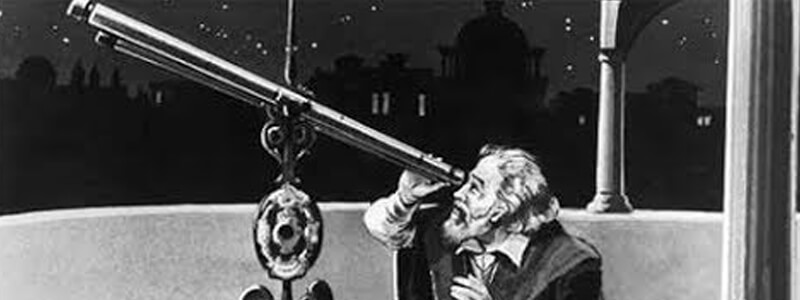
Fact Fans, when asked about the inventor of the telescope, most people immediately think of Galileo Galilei. And honestly, I did too! But the surprising truth is, Galileo was more of a ‘brilliant refiner’ and ‘popularizer’ than the original creator. He was like the person who made the first smartphone truly smart and widely adopted, not the one who invented the very first mobile phone. The true origins are a bit more complex and communal! This fact highlights that innovation often involves a chain of contributors, with each adding a vital link. Galileo’s genius lay in recognizing the immense potential of the ‘spyglass’ for astronomical observation, a vision that transformed a simple toy into a powerful scientific instrument. His work was indeed revolutionary, but built upon earlier, less recognized efforts.
- Galileo is widely credited but not the primary inventor.
- He significantly improved the design and applied it to astronomy.
- His contributions were essential for popularizing the device.
2. An Accidental Discovery by Dutch Spectacle Makers
Serendipity in a Workshop
Picture this: in 1608, a group of spectacle makers in the Netherlands, possibly by pure serendipity or playful experimentation, stumbled upon the principle that combining two lenses could magnify distant objects. It was like they were just tinkering with glass, and suddenly, they found a treasure! This accidental discovery truly changed history. It underscores how often groundbreaking inventions arise from unexpected moments of curiosity and experimentation, rather than planned scientific quests. The environment of innovation in 17th-century Holland, particularly among artisans, created fertile ground for such a pivotal discovery. This was a true ‘eureka’ moment, born not from a hypothesis, but from observation and playful manipulation of optics.
- The initial concept of the telescope was an accidental discovery.
- It emerged from workshops of spectacle makers in the Netherlands.
- The year 1608 marks this crucial, unplanned breakthrough.
3. Hans Lippershey: The First to Seek a Patent
Securing a Place in History (Almost)

Among the various Dutch spectacle makers experimenting with lenses, Hans Lippershey stands out for one critical reason: he was the first to apply for a patent for such a device in October 1608. His ‘kijker’ (Dutch for ‘looker’) reportedly magnified objects three times. Maybe he thought, ‘This could be great for spying on my neighbors!’ Just kidding, Fact Fans! But seriously, he was the quickest to formally document his invention. Lippershey’s foresight in attempting to patent his device highlights the early recognition of its potential value, even if his patent was ultimately denied due to similar claims from others. Nevertheless, his name is firmly etched in the history of optics as a significant pioneer, emphasizing the importance of securing intellectual property in a competitive environment.
- Hans Lippershey applied for a patent for a ‘kijker’ in October 1608.
- His device offered a 3x magnification.
- Though the patent was not granted, his application is a key historical record.
4. Initially a Military and Maritime Tool, Not an Astronomical One
From Battlefields to Starfields

Another fascinating fact is that the telescope wasn’t immediately aimed at the stars. Its initial applications were predominantly military and maritime. Imagine generals using these early ‘spyglasses’ to observe enemy movements or sailors spotting distant land. Pretty practical, right? So, before it became an astronomer’s best friend, the telescope was a reliable ‘spy.’ This illustrates how many groundbreaking technologies find their initial purpose in practical, often mundane, applications before their broader, more profound potential is realized. The journey from a tool of war to an instrument of cosmic exploration is a testament to human adaptability and visionary insight, showing how a single innovation can have diverse impacts.
- Early telescopes were primarily used for military reconnaissance and naval navigation.
- Their astronomical potential was not immediately recognized.
- This practical application predated its scientific use.
5. Galileo’s Game-Changing Innovation and Skyward Turn
The Astronomical Awakening

This is where Galileo truly enters the spotlight! Upon hearing about this ‘distant seeing device,’ he immediately put his brilliant mind to work. In a remarkably short time, he constructed his own telescopes, achieving significantly higher magnifications than the initial Dutch models. And most importantly, he had the ‘crazy’ idea to be among the very first to systematically point this instrument towards the heavens! From there, a simple ‘spyglass’ transformed into an ‘eye’ that unveiled the universe’s secrets. How cool is that inspiration? Galileo’s contributions were not just technological improvements but a profound shift in application, fundamentally altering humanity’s cosmic perspective. His observations of Jupiter’s moons, the phases of Venus, and the Moon’s craters provided compelling evidence for the heliocentric model, triggering a scientific and intellectual revolution.
- Galileo Galilei significantly improved telescope design and magnification.
- He was one of the first to point a telescope at celestial objects.
- His observations provided key evidence for the heliocentric model.
6. From Simple ‘Looker’ to Cosmic Eye: The Evolution of Telescopes
Humanity’s Expanding Vision of the Universe
Lippershey’s initial ‘kijker’ was just the genesis. After Galileo applied it to astronomy, the world was never the same. Imagine, from that simple optical tube, we now have the venerable Hubble Space Telescope, which has served for decades, to the cutting-edge James Webb Space Telescope. This all proves that human curiosity knows no bounds, Fact Fans! The continuous evolution of telescope technology, from basic refractors to complex orbiting observatories, showcases humanity’s relentless drive for knowledge. Each new generation of telescopes pushes the boundaries of what we can see and understand, unveiling deeper and more ancient secrets of the cosmos. This journey is a powerful testament to scientific progress and collective ingenuity, inspiring us to continue our quest for exploration.
- Telescopes have undergone continuous technological advancements.
- Modern examples include the Hubble and James Webb Space Telescopes.
- Each advancement reveals more profound cosmic insights.
7. Reshaping Our Worldview: The Copernican Revolution and Beyond
Telescopes That Challenged Dogma
The telescope’s impact extended far beyond mere observation; it fundamentally reshaped humanity’s understanding of its place in the universe. Thanks to the telescope, we learned that Earth is not the center of the cosmos, that Jupiter has its own moons, and that countless galaxies exist beyond our own. This is proof that science can indeed ‘dismantle’ dogma and open our eyes to truths that are far vaster and more astonishing! The philosophical and scientific ramifications of the telescope were immense. It forced a re-evaluation of long-held beliefs and ushered in an era where empirical evidence challenged traditional authority. This profound shift, often called the Copernican Revolution, demonstrates the power of direct observation and critical thinking to transform our collective worldview, making the telescope’s invention one of the most significant intellectual milestones in human history.
- The telescope provided empirical evidence supporting the heliocentric model.
- It challenged the long-standing geocentric worldview.
- This led to a major paradigm shift in science and philosophy.
Reflection: The Mind’s Eye and the Telescope’s Eye
Fact Fans, the story of the telescope’s invention teaches us that the true ‘eye’ is not just what’s in our head, but also the ‘eye’ of curiosity, the ‘eye’ of experimentation, and the ‘eye’ of courage to look beyond what is immediately visible. From a simple pair of lenses in the hands of a Dutch spectacle maker to giant mirrors orbiting in space, the telescope symbolizes humanity’s boundless ambition to comprehend the universe. Every time we gaze at the night sky, remember the long and intriguing journey behind each twinkling light we see. This narrative is a powerful reminder that with a little curiosity and the courage to try, we can all be part of an endless exploration. So, never stop asking questions, never stop seeking answers!
For more fascinating insights and unique facts, visit DepoTopic.com.
Need similar articles or content for your business? Our professional team is ready to assist! Contact us for SEO article writing services, social media management, and content consultation.


